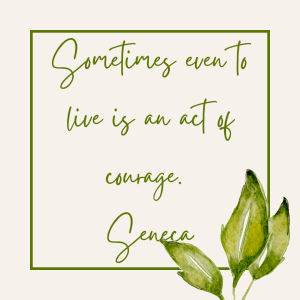
Change asks us not only to adjust what we do. It often asks us to reorganise who we are. This is why certain periods of life feel heavier than others. Not necessarily because more is happening, but because what is happening is requiring something deeper of us. And in those moments, the question people often ask themselves is: “Why am I not coping better?” Perhaps this is an unhelpful question, as resilience is a complex concept.
Resilience is often misunderstood as strength, endurance or the ability to push through. But psychologically, resilience is something far more nuanced. It is not the absence of distress. Nor is it the ability to remain calm in every storm. And it is certainly not the ability to carry on as if nothing is happening.
Resilience is the capacity to remain present with yourself as something difficult unfolds. It is the ability to feel, to wobble, to question and still find a way to stay engaged with your life.
When faced with periods of necessary or unexpected change, our internal system tries to manage the environment by revising expectations, roles, and assumptions about how things work. This process requires energy and may feel disproportionately difficult.
We often look for resilience in big, defining actions. But more often, it is built quietly, in ways that are easy to overlook. Resilience develops in the small moments that often go unnoticed. Such as pausing before reacting, even when you feel overwhelmed. Naming what you feel, instead of dismissing it. Choosing not to withdraw completely, even when part of you wants to. Allowing uncertainty to exist without rushing to resolve it. These moments may seem insignificant. But they are not. They represent a shift from avoidance to engagement. And that is where resilience begins.
One of the less-spoken-about aspects of resilience is internal safety. When things around us feel unstable, the nervous system looks for something predictable to hold onto. If that safety is not available externally, it needs to be cultivated internally. This does not mean forcing yourself to feel calm. It means creating small, repeatable experiences of steadiness.
This might include:
- Grounding yourself in the present moment (through breath, sensation, or environment)
- Returning to routines that create a sense of structure
- Speaking to yourself in a way that is steady rather than critical
Over time, these practices build a sense of psychological anchoring, a feeling that even if things are shifting, you are not entirely unmoored.
It’s important to be clear, resilience does not remove difficulty. Resilience does not make change easy, nor does it eliminate discomfort or moments of doubt. What it does is change your relationship to those experiences. It shifts the internal focus from “I shouldn’t be feeling like this” to “This is difficult, and I am still able to stay with it.” That shift is subtle but powerful.
During change, progress is rarely linear. It does not always look like moving forward. Sometimes, it looks like staying where you are without collapsing. Sometimes, it looks like trying again after pulling away. And sometimes, it looks like simply noticing what is happening internally without needing to fix it immediately. These are not signs of stagnation. They are signs of adaptation.
Resilience is not something you either have or do not have. It is something that is built, moment by moment, in how you respond to what is difficult. Not perfectly, not consistently, but gradually. And often, long before you recognise it, it is already there in the way you are still showing up, still reflecting, still trying to understand.
In the next post, we explore the concept of internal safety the psychological anchor that shapes how we experience stress, uncertainty, emotion, and ultimately, resilience itself.
Author: Heather Delaney, Clinical Psychologist